
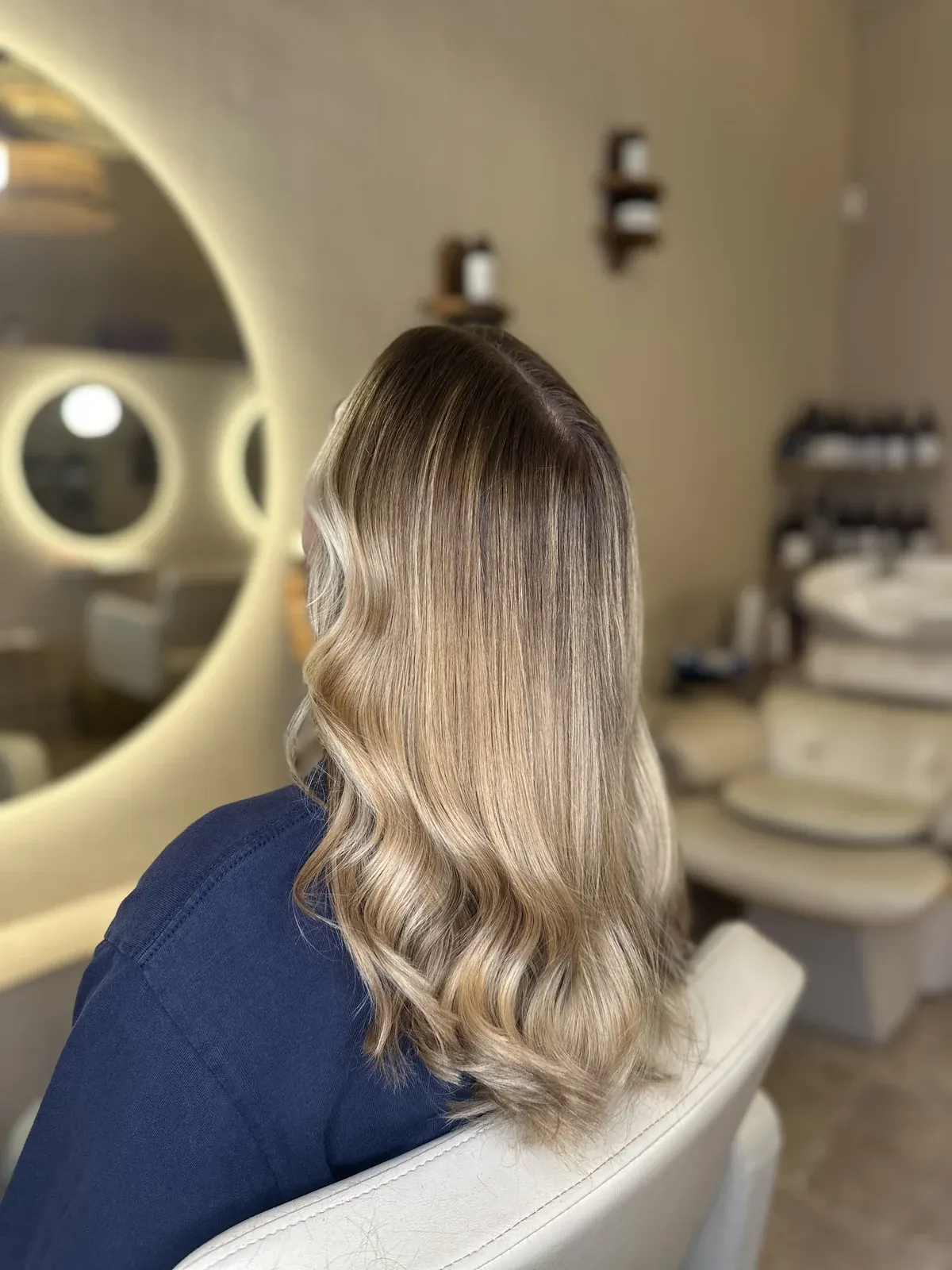
AirTouch, toner, cool beige: technique or shade?
AirTouch selects the strands to lighten using airflow to move shorter hairs out of the way, as explained by Wella Professionals. This technique alone does not determine the final shade. In the salon’s sun-kissed AirTouch balayage case on a natural dark blonde base, the aim was to place lightness through the lengths and retain depth at the roots for a sun-kissed result.
The all-over cool beige blonde case aimed for a more even colour, neither too golden nor too ashy. In the icy blondecase, the hair is lighter still: a cool toner neutralised yellow tones to create an almost icy shade. Maintaining this result means monitoring how the tone changes.
The client in the Hair Touch with two toning stages case already had yellow tones and a visible root line. The question was more than “lighter or darker”: the strands to lighten, the root transition and the tone through the lengths each needed separate attention.
The inspiration photo does not show the starting point
A photograph of the result you want helps prepare your appointment, as does a photograph of your current hair. Natural hair, previously coloured hair and already bleached lengths need different approaches. The condition of the ends also matters: a very light shade is unsuitable if the hair cannot tolerate the proposed lightening.
The salon’s before-and-after photographs offer a reference, rather than a promise to reproduce a colour exactly. Compare the starting colour, the depth retained at the roots and the contrast through the lengths. Even photographs of the same case may have different lighting.
Upkeep: distinguish root regrowth, tone and hair condition
Toner adjusts the tone; it cannot replace lightening when more lift is needed. Blending the roots can soften the regrowth line without making the lengths maintenance-free. If the blonde shade still looks right but the ends feel dry, the priority becomes conditioning rather than colour. The hair Botox guide explains the distinction.
At your Pure Beauté consultation, explain your previous colour treatments and how often you are willing to return. Icy blonde and softly blended AirTouch have different upkeep needs between visits. The article maintaining your blonde explains home care, toning and further lightening as separate needs. To neutralise yellow tones, ask which product to use and follow its instructions; do not copy the processing time for a different formula.
Start with your current colour, then choose the technique and shade
At the salon, explain which areas you would like lightened and the level of lightness and tones you want. A cool beige or icy blonde photo can help express a preference; it does not determine the technique to use on your base or the service to book.
Your hair history may call for a different result or several stages. These case studies do not publish the number of sessions, the client’s budget or comparable follow-up for every case; the photographs alone cannot establish those details.
| Starting point in the published case | Documented request | Reference for your project |
|---|---|---|
| Natural dark blonde base | Sun-kissed AirTouch | Placement of lighter strands with depth retained at the roots |
| Previously lightened blonde with yellow tones and a visible root line | Hair Touch, Root Shadow and two toning stages | Separate lightening, root blending and tone |
| Darker base with previously lightened, uneven lengths | All-over blonde for a more even colour | Desired lightness and depth |
| Darker roots and already blonde lengths with warm tones | Icy blonde with a cool toner | What your starting colour allows and how to maintain the shade |
From advice to an appointment
See more salon work and updates on Pure Beauté’s official accounts. For a blonde colour appointment, check current services and appointment availability on Planity. For a colour correction, previously bleached hair or help choosing a treatment, describe your plans to the salon before choosing an appointment.